SEO vs AEO: What 20 Years of Agency Work Taught Us About Search Evolution
How AI-powered search is changing visibility for enterprise brands
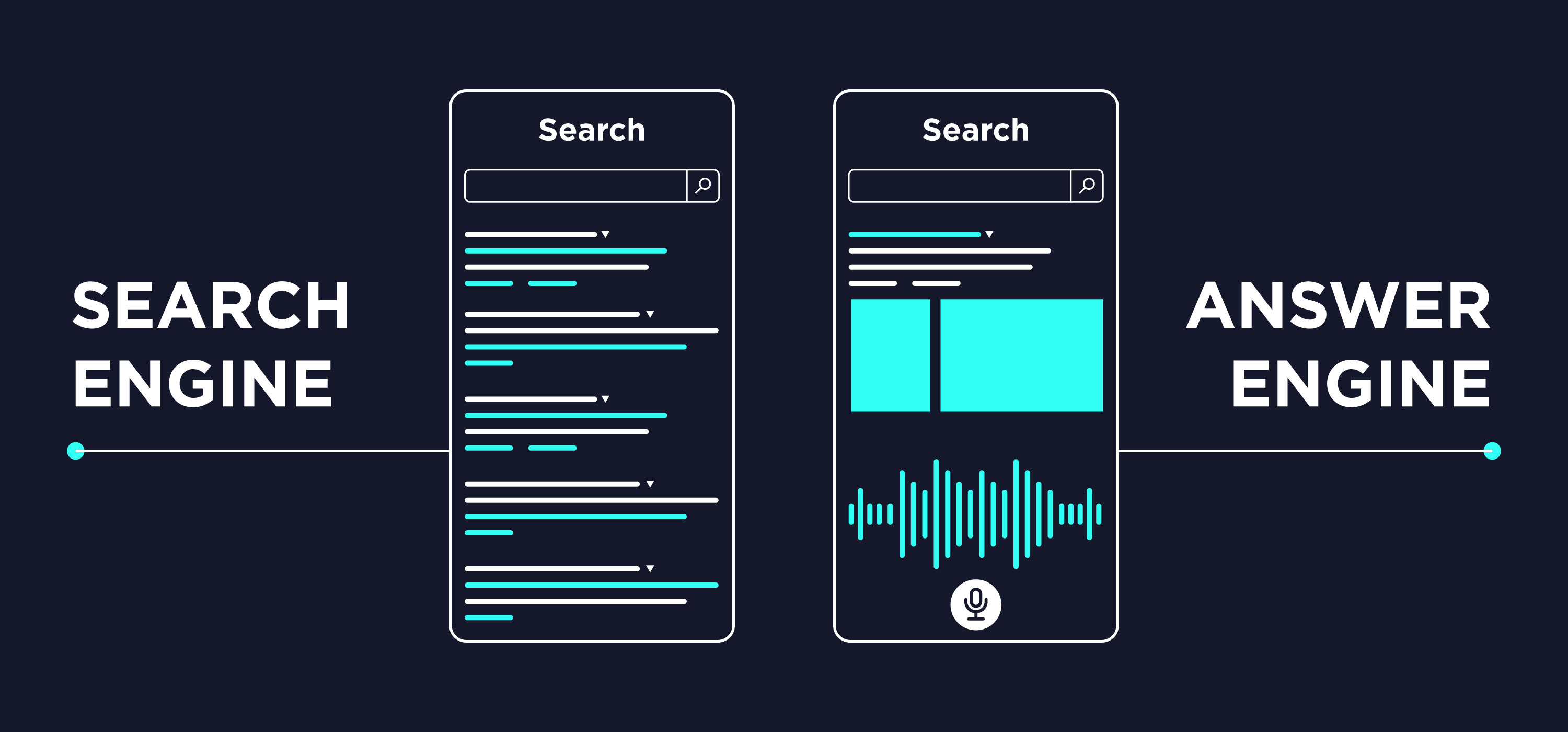
Search engines aren't just ranking pages anymore—they're generating answers. For marketing leaders at enterprise companies, this shift changes everything about how potential customers discover your brand.
After two decades building digital experiences for clients like Netflix, Harvard Business School, and Adidas, we've watched search evolve from keyword matching to semantic understanding to AI-generated responses. The latest shift is the most significant yet.
Overview
Traditional Search Engine Optimization (SEO) helped your pages rank for relevant queries. Answer Engine Optimization (AEO) ensures AI platforms like ChatGPT, Perplexity, and Google's AI Overviews can extract, understand, and cite your content when answering user questions.
Both matter. But they require different approaches.
The numbers tell the story
Google's AI Overviews now appear in roughly 13% of U.S. searches, according to Semrush data from 2025. That's one in eight search experiences that may never result in a traditional click to your website.
For B2B brands, this creates both a challenge and an opportunity. Your content can reach buyers without them visiting your site—but only if AI systems recognize your expertise and cite your information.
What is SEO and why does it still matter?
SEO remains the foundation of digital visibility. It aligns your content with user intent while removing technical barriers that prevent search engines from discovering and understanding your pages.
The core hasn't changed: topical relevance through strategic content, technical excellence for crawlability and performance, and authority signals through expertise and backlinks.
Why B2B companies still rely heavily on SEO
Enterprise buying cycles are long. Decision-makers research for weeks or months before engaging with sales teams. SEO ensures your content appears throughout the journey: initial awareness, solution research, vendor comparison, and final decision.
We've seen this with our own clients. The Harvard Business School project required content that served multiple audiences—prospective students, current students, faculty, and alumni—each at different stages of their relationship with the institution. SEO helped organize that complexity into discoverable pathways.
Technical SEO builds the foundation
Technical optimization creates the infrastructure for both human readers and AI interpretation.
Critical focus areas include Core Web Vitals optimization to reduce friction and improve user experience, strategic internal linking that clarifies topical relationships and content hierarchy, and canonical tags plus structured data that eliminate ambiguity for both search engines and AI systems.
This is where modern platforms like Webflow and Framer provide significant advantages. Built-in performance optimization, clean semantic HTML, and straightforward schema implementation mean technical SEO happens by design rather than requiring extensive custom development.
What is Answer Engine Optimization?
AEO prepares your content for AI systems to extract, summarize, and cite directly in generated responses. It's less about ranking position and more about representation—ensuring your expertise surfaces when AI tools respond to questions in your domain.
The shift is fundamental. Traditional SEO drove clicks to your website. AEO earns citations that build authority even when users never leave the AI interface.
How is AEO different from SEO?
SEO targets comprehensive content that ranks well and drives organic clicks. AEO prioritizes concise, structured answers that AI systems can easily extract and attribute.
SEO asks: "Will this page rank for relevant searches?" AEO asks: "Can AI systems understand and cite this information?"
The content requirements differ significantly. SEO rewards depth and comprehensive coverage. AEO rewards clarity and explicit structure. The best strategy incorporates both.
Why structured data matters more than ever
Schema markup has existed for years, but AI search makes it critical rather than optional. Structured data provides the explicit context AI systems need to identify authoritative sources and understand relationships between entities.
JSON-LD markup creates a knowledge graph that connects your organization to your content, authors, products, and expertise areas. AI systems use these connections to validate both authority and context simultaneously.
Implementation strategy for AI search
Build connected schema rather than isolated markup blocks. Link your Organization schema to Article schema to Author schema to create explicit relationships AI can follow.
Google and Microsoft both emphasized this connected approach in their 2025 guidance because it helps AI systems validate claims, understand context, and attribute information correctly.
Modern platforms simplify this considerably. Webflow's custom code embedding and CMS structure make schema implementation straightforward. Framer's component-based architecture allows schema to be templated and reused across similar content types.
What schema types matter most?
Organization schema defines your brand identity, location, and social profiles. It establishes who you are in the knowledge graph.
Article schema signals content expertise with author attribution, publication dates, and topical focus. It tells AI systems this is authoritative information worth citing.
Product or Service schema structures offerings with clear descriptions, pricing, and availability. It makes your solutions discoverable through natural language queries.
BreadcrumbList schema clarifies site hierarchy and content relationships. It helps AI understand how information connects within your domain.
Each type plays a specific role in how AI interprets and attributes your content—from establishing brand credibility to clarifying content hierarchy to demonstrating topical authority.
How SEO and AEO work together
The most effective strategies integrate both approaches. SEO attracts qualified human visitors who engage deeply with your content. AEO converts visibility into citations that build authority across AI platforms.
These effects compound over time. Pages that rank well in traditional search often get cited by AI systems. Citations from AI platforms strengthen your domain authority, which improves traditional rankings.
The relationship is reinforcing rather than competitive. Human trust and machine visibility strengthen each other when content and structure work in tandem.
Why integration matters for enterprise brands
For B2B companies selling complex solutions, this integration is particularly valuable. Your technical documentation, case studies, and thought leadership can serve both humans researching solutions and AI systems answering questions about your market.
When we migrated clients from legacy CMS platforms to Webflow, we rebuilt content with both audiences in mind. The result was faster-loading pages that rank well and structured information that AI systems cite consistently.
Measuring AEO performance
Unlike SEO, AEO doesn't have a single analytics dashboard yet. Measurement requires assembling data from multiple sources.
AI platform monitoring: Tools like Semrush's AI SEO Toolkit or OmniSEO track brand mentions in ChatGPT, Perplexity, and Microsoft Copilot.
Featured snippet tracking: Monitor owned snippets in Google Search Console. Featured snippets often become sources for AI-generated answers.
Zero-click analysis: Filter Search Console queries with high impressions but low clicks. These often indicate AI Overviews are answering questions using your content.
Conversion comparison: Segment Google Analytics 4 traffic by source. Early research shows AI-sourced traffic converts two to three times higher than traditional organic visits, reflecting stronger intent and established trust.
How B2B tech companies should leverage AEO
Enterprise buyers consume extensive content before contacting sales—often ten or more pieces according to research from Gartner. When your explanations power AI responses, you gain credibility before prospects reach your site.
Priority content types for B2B AEO include product comparison tables formatted for easy extraction, integration guides with structured technical specifications, use case definitions that match natural language queries, and ROI frameworks that summarize measurable business impact.
This aligns perfectly with the content enterprise buyers need. You're not creating new content types—you're structuring existing expertise for both human and AI consumption.
Voice search and conversational AI
Voice interfaces change both how users phrase questions and how AI interprets them. Conversational queries are longer, more specific, and often framed as complete questions rather than keyword strings.
Voice search results average 29 words in AI-generated responses, according to Backlinko's analysis of 10,000 voice queries. That means concise, complete answers perform best.
To optimize for voice and conversational AI, write full-sentence answers that sound natural when read aloud, lead with clear definitions in the first 40-50 words, and test content by actually reading it out loud.
Testing voice-readiness effectively
Ask ChatGPT, Perplexity, or Google's Gemini the questions your content answers. Note which sources get cited, then analyze their phrasing, structure, and formatting. This reveals what AI systems consider authoritative and well-structured.
Voice search optimization and AEO share core principles: content must be clear, concise, and citable to resonate with both human listeners and AI systems parsing information.
Key trends shaping visibility in 2025
The future lies in connection rather than keywords. Semantic clarity, entity relationships, and machine-readable expertise signals now determine whether your brand is found, cited, and trusted.
Semantic search and entity clarity: AI models prioritize explicit relationships. Connecting your content to established knowledge graphs through schema, internal linking, and consistent entity naming enhances visibility across platforms.
Generative search expansion: AI Overviews in Google and Bing have doubled year over year. Brands with verified structure and strong author signals rise fastest in these new formats.
E-E-A-T becomes machine-readable: Experience, Expertise, Authoritativeness, and Trustworthiness now influence AI citation eligibility. AI validates authority through the same signals humans do—credentials, citations, case studies, research—only faster and at scale.
Include detailed author credentials, cite primary sources, and integrate specific case studies or original research. These signals work for both human readers evaluating your expertise and AI systems determining citation worthiness.
What this means for marketing leaders
The platform you choose impacts how easily you can implement these strategies. Legacy CMS platforms often require custom development for proper schema implementation, performance optimization, and semantic structure.
Modern platforms like Webflow and Framer build these capabilities in by default. Clean semantic HTML, automatic performance optimization, straightforward schema embedding, and component-based structure make both SEO and AEO implementation significantly faster.
We've seen this transformation firsthand migrating enterprise clients. What once required weeks of custom development now happens during the initial build. Marketing teams can focus on content strategy rather than technical implementation.
Key takeaways
SEO builds discoverability through technical excellence and comprehensive content. AEO structures information for machine comprehension and direct citation. Connected schema and semantic consistency bridge the two approaches. Voice optimization and E-E-A-T signals enhance credibility across all formats. Together, they secure visibility in both traditional search engines and emerging AI answer platforms.
At Espress Labs, we help enterprise brands navigate this transition. After 20+ years building digital experiences for leading companies, we've learned that sustainable visibility requires both human understanding and machine readability.
The search landscape is evolving rapidly. The brands that adapt their content strategy, technical infrastructure, and platform choices now will dominate visibility as AI-powered search becomes standard.
Ready to optimize for both traditional and AI search? Espress Labs specializes in building high-performance websites on platforms designed for modern search. Schedule a consultation to discuss your search visibility strategy.