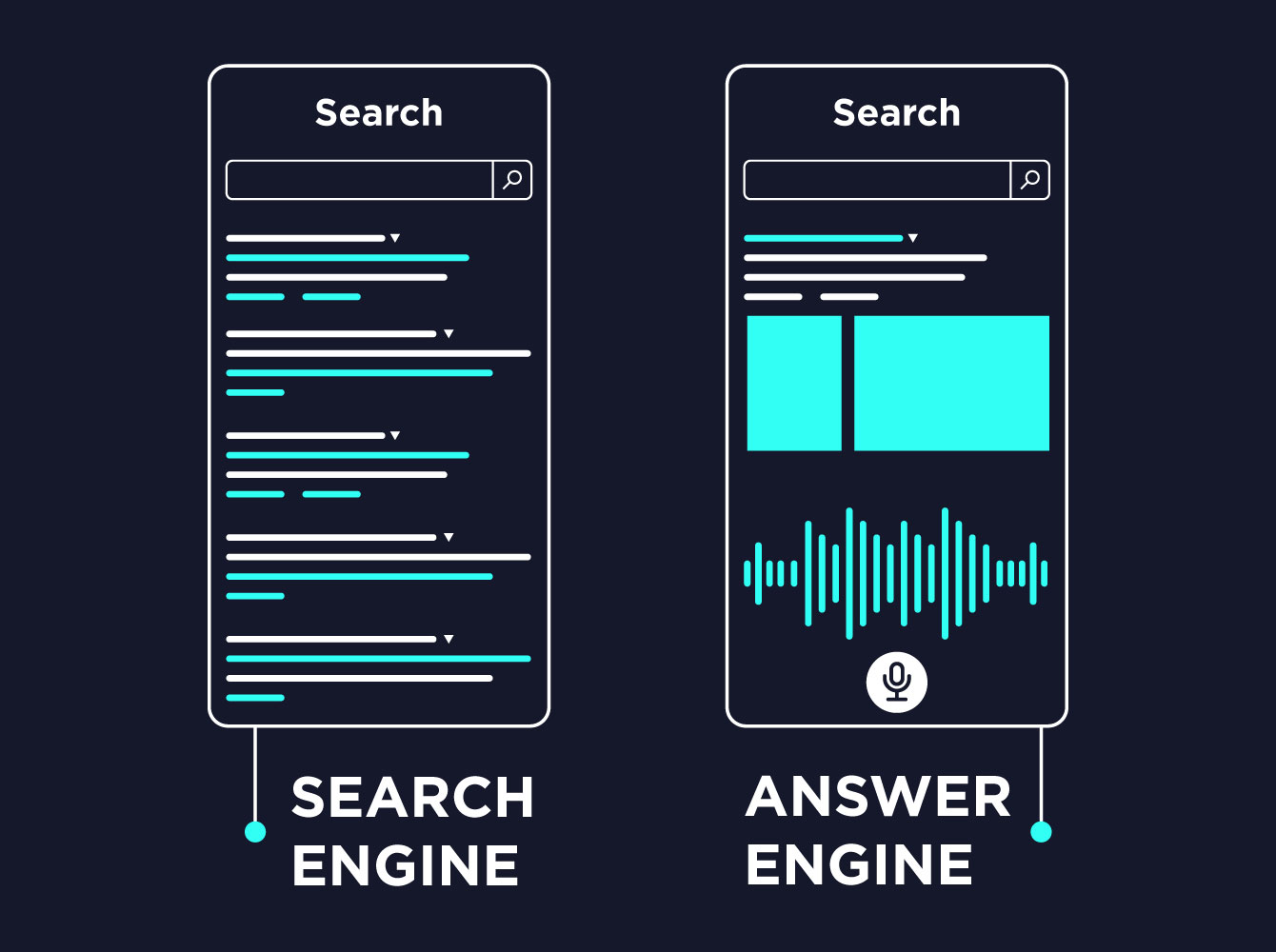
Why ChatGPT Advertising Signals a Fundamental Shift in B2B Marketing
OpenAI's recent announcement about introducing paid advertising into ChatGPT has sparked conversation across the marketing industry. But the real story isn't about a new ad format. It's about where commercial influence is allowed to appear during the decision-making process, and what that means for B2B brands competing in traditional industries.

The introduction of paid ads into ChatGPT isn't just another advertising channel. It represents a fundamental change in how commercial influence operates during the decision-making process, and B2B companies need to understand what this means for their marketing strategies.
For the past two decades, digital advertising has operated on a simple principle: interruption. Search ads intercept intent at the moment someone knows what they want. Social ads interrupt attention while people browse. Display advertising fills the gaps between content.
ChatGPT's approach to advertising is structurally different. These ads will appear inside a trusted decision-making environment, not alongside search results or social feeds. That distinction matters far more than the formats themselves.
Advertising Inside the Decision-Making Process
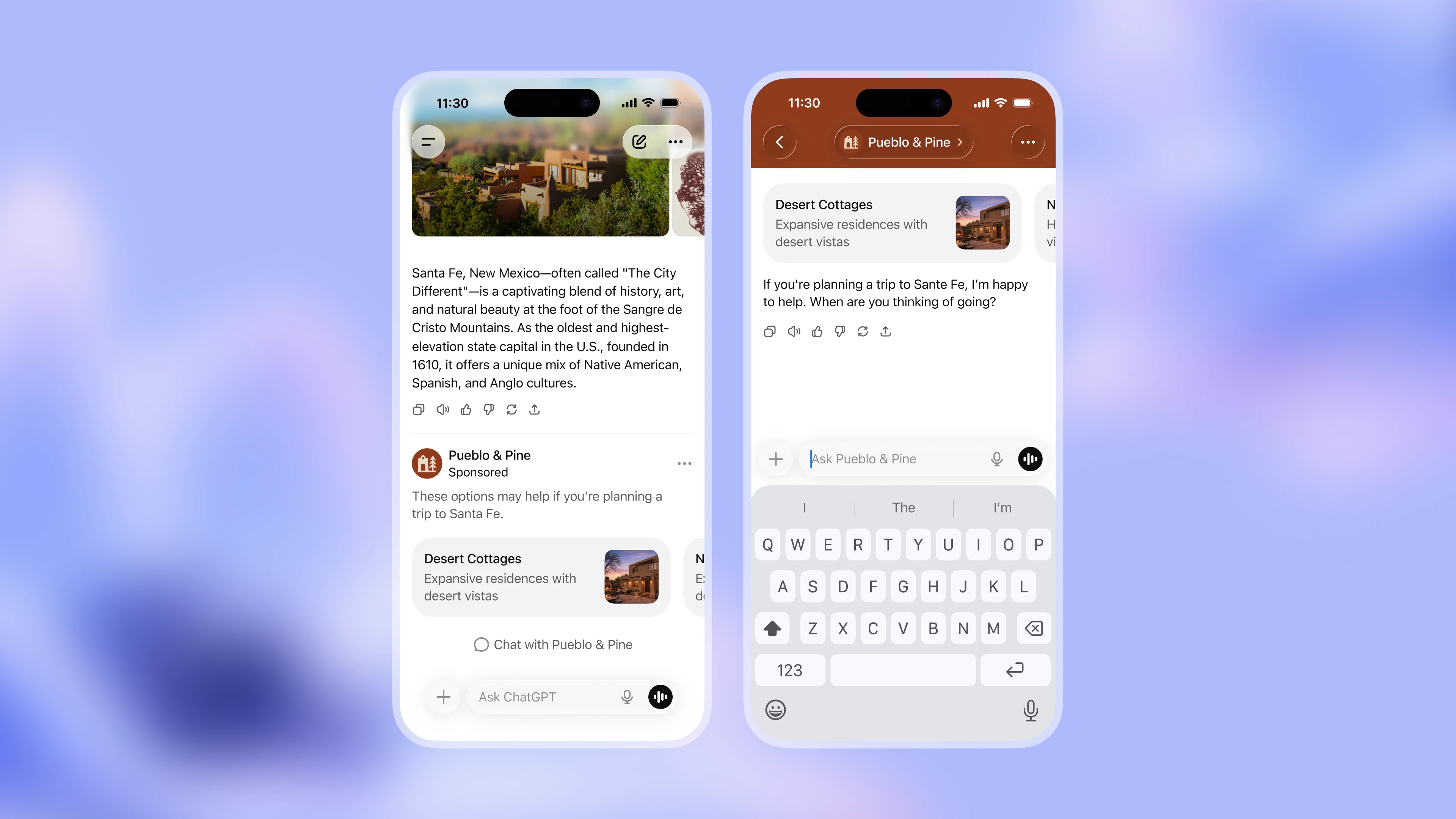
Starting with US-based users on free and Go tiers, paid ads will appear at the bottom of ChatGPT responses, clearly separated from answers and only when there's a relevant product or service connected to the conversation. Google is moving in a similar direction with new ad formats designed for AI Mode and Gemini.
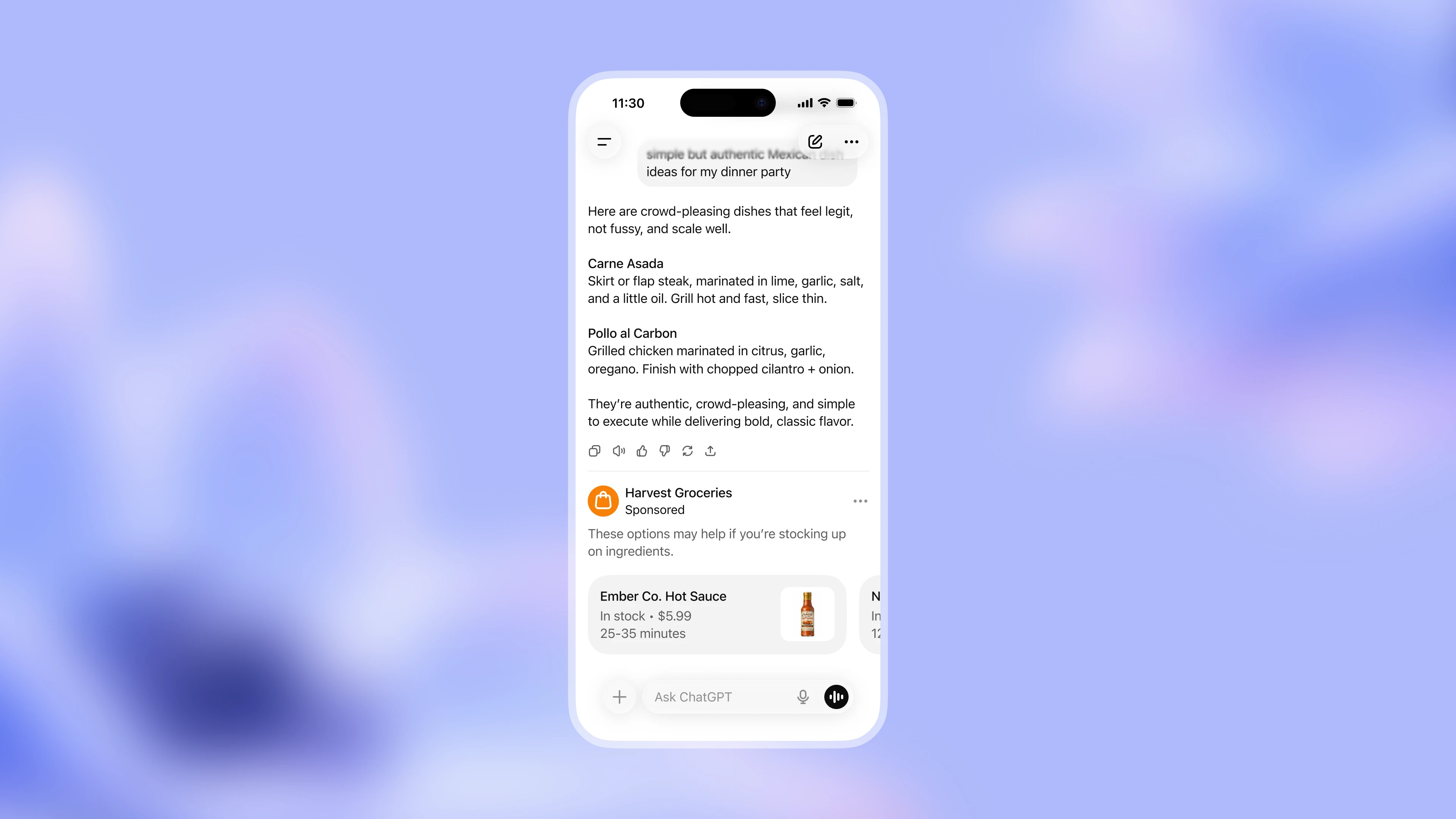
What makes this significant is the context. ChatGPT isn't positioned as media. It's positioned as a utility where people think, decide, plan, and learn. Unlike search, where users accept ranked results and paid placements, conversational AI feels advisory, closer to asking a trusted colleague than browsing results.
For B2B companies in traditional industries, this shift has immediate strategic implications.
Why Conversational Environments Expose Weak Brands
In traditional advertising channels, brands rely on repetition, visual dominance, and proximity to keywords. In conversational environments, brands can be questioned immediately.
If an ad allows users to ask follow-up questions directly, every claim gets scrutinized. Pricing, delivery capabilities, sourcing practices, sustainability commitments, and actual differentiation all come under real-time examination.
This isn't theoretical. It's already happening as buyers use AI tools to research suppliers, compare specifications, and evaluate claims before ever contacting a sales team.
For B2B brands, this means:
- Generic positioning gets exposed quickly
- Vague value propositions don't hold up under questioning
- Surface-level differentiation isn't enough
- Brand clarity becomes a competitive requirement, not a nice-to-have
The Competition Isn't Google Ads
It's tempting to view ChatGPT ads as a future challenger to Google Search advertising, but that comparison misses the point.
Search monetizes expressed intent (someone actively looking to buy). ChatGPT monetizes assisted intent, sitting earlier in the thinking process where buyers are shaping preferences, evaluating trade-offs, and developing their understanding of what solutions exist.
This puts conversational AI in competition with content marketing, industry publications, peer reviews, and thought leadership more than traditional PPC.
The strategic question becomes: Is your brand visible only when someone searches for you by name, or are you present when they're deciding what "good" looks like in your category?
What B2B Companies Should Be Thinking About Now
Even before these ad formats launch more broadly, there are clear implications for marketing strategy:
Brand Clarity Over Optimization Tricks
If your brand can't explain itself clearly in plain language, it will struggle in conversational environments. The ability to articulate your value proposition, differentiation, and proof points clearly matters more than keyword optimization.
Authority Signals Beyond Paid Placement
How your brand appears in organic conversations, AI-generated summaries, and recommendations will shape how any paid presence is interpreted. Investment in thought leadership, technical content, and industry participation becomes more valuable.
Usefulness Over Persuasion
Marketing is moving from visibility and persuasion to usefulness and assistance. Brands that help buyers make better decisions will outperform brands that simply promote products.
Integration of Paid and Organic Strategy
The traditional separation between paid advertising and organic content is collapsing. Conversational AI environments blend these together, meaning your content strategy and advertising strategy need to work as one system.
Trust as a Measurable Marketing Asset
OpenAI has been explicit that ads will not influence ChatGPT's answers and that conversations won't be shared with advertisers. This isn't just a privacy commitment, it reframes trust as infrastructure.
In most platforms, trust is a reputational concern. In conversational AI, it's a dependency. Lose user trust and the entire system fails.
For B2B brands, this creates an opportunity. Companies that have invested in building genuine authority, transparent communication, and authentic expertise will have a natural advantage in environments where trust is the prerequisite for visibility.
What This Means for Traditional Industries
If you're a manufacturer, distributor, or service provider in construction materials, automotive, industrial equipment, or similar sectors, this shift toward conversational AI has specific implications:
Your buyers are already using these tools to research suppliers, understand technical specifications, compare options, and develop RFPs before they ever contact you. The question isn't whether to adapt, but how quickly you can position your brand to be helpful during that research phase.
This is why strategic positioning matters more than tactical execution. A website that simply lists products and services won't be sufficient. Brands need:
- Clear articulation of expertise and specialization
- Content that genuinely helps buyers understand complex decisions
- Demonstration of authority through original insights, not generic information
- Transparent communication about capabilities, processes, and limitations
The Takeaway for B2B Marketers
The introduction of advertising into ChatGPT represents more than a new placement opportunity. It signals that influence is expanding beyond keywords and clicks to include the earlier, more ambiguous phases of decision-making.
The winners won't be the companies that chase the newest advertising channel. They'll be the brands that have invested in clarity, authority, and usefulness, positioning themselves as trusted advisors rather than just vendors.
For traditional B2B companies undergoing digital transformation, this validates a strategic approach over a tactical one. Your digital presence needs to work as a system that builds authority, demonstrates expertise, and earns trust at every stage of the buyer journey.
The brands that prepare for this shift now, without rushing to spend on unproven formats, will be the ones positioned to capitalize when conversational commerce becomes standard.